Optimising Workstations Through Digital Twin Technology

Optimising Workstations Through Digital Twin Technology
Bovis Midi-Pyrénées Driving Industrial Performance
In an industrial environment where competitiveness depends on continuous process improvement, workstation optimisation has become a major challenge. Companies are looking for innovative solutions to improve ergonomics, increase productivity and secure their operations while minimising production downtime.
By combining Lean Manufacturing, 3D scanning and digital twin technology, Bovis Midi-Pyrénées supports manufacturers in transforming their production environments through a proven methodology, from capturing existing conditions to the practical implementation of the project. Based on the content of the presentation Industrial Optimisation: From Field Reality to the 3D Model, this article highlights the benefits of this innovative approach.
Why Optimise Workstations?
The organisation of a workstation directly impacts:
- Operator productivity;
- Safety conditions;
- Production quality;
- Internal movements and material flows;
- Overall industrial performance.
A poorly designed workstation leads to time losses, ergonomic risks and hidden costs. Conversely, an optimised workstation improves operational flow and enhances company profitability.
This is precisely where digital twin technology delivers significant added value.
Lean Manufacturing as the Starting Point
Any optimisation initiative begins with an in-depth analysis of existing processes. The objective is to identify waste, unnecessary movements and constraints that limit workstation performance.
The approach developed by Bovis Midi-Pyrénées combines Lean Manufacturing principles with advanced digital tools to design solutions perfectly adapted to real-world operational conditions.
This phase enables companies to:
- Map workflows;
- Identify bottlenecks;
- Improve workstation ergonomics;
- Reduce non-value-added activities;
- Prepare for future facility developments.
Workstation optimisation is therefore approached as a comprehensive project encompassing human, technical and organisational dimensions.
3D Scanning: Capturing Reality with Precision
Before any modifications are made to an industrial environment, it is essential to obtain an accurate representation of existing conditions.
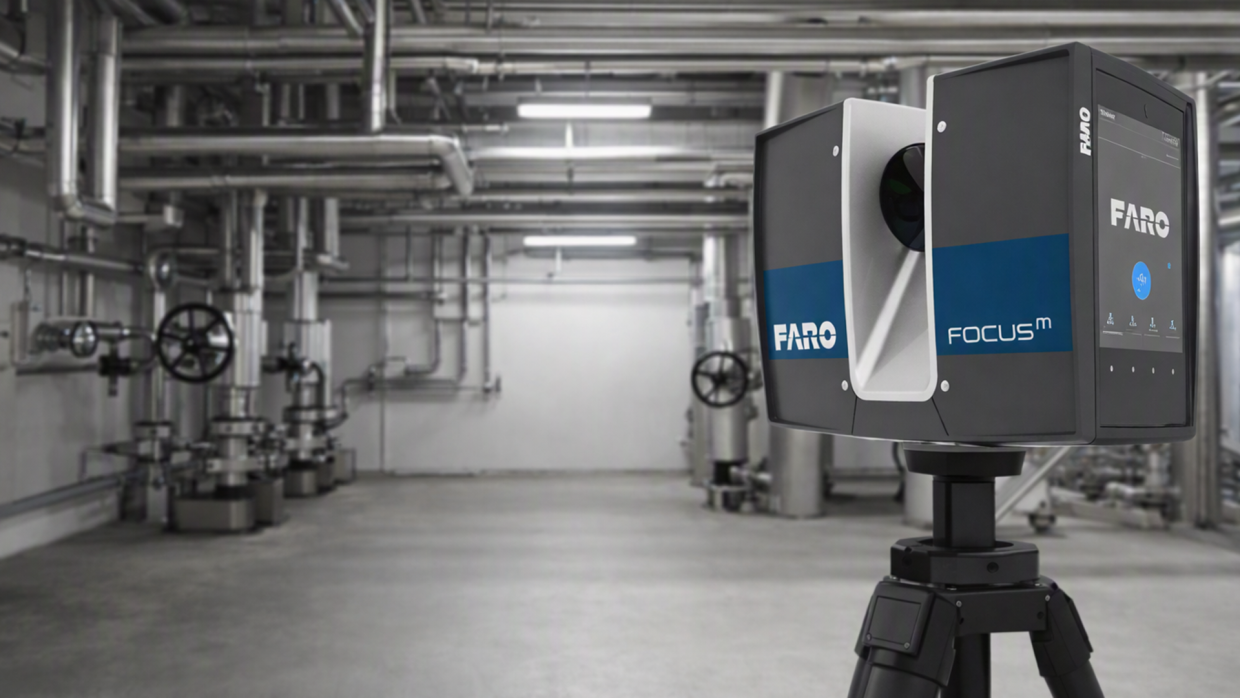
The first step involves carrying out a 3D scan of the environment to identify all physical constraints on site and secure the project study. This technology captures buildings, equipment, utility networks and circulation areas with millimetre-level accuracy.
The benefits of 3D scanning include:
- Rapid acquisition of site data;
- Elimination of errors associated with manual measurements;
- Reduced risks during project execution;
- Comprehensive visualisation of existing spaces;
- A reliable foundation for designing future layouts.
The resulting point cloud becomes the digital foundation upon which the entire project is built.
Digital Twin Technology at the Core of the Design Process
Once the environment has been captured, teams create a complete 3D model of the project. This stage makes it possible to virtually integrate new equipment, production lines or workstations before any on-site intervention takes place.
Using this digital twin, manufacturers can:
- Visualise their future working environment;
- Test multiple layout scenarios;
- Verify access routes and maintenance areas;
- Optimise operator and material flows;
- Anticipate technical constraints.
Virtual simulation facilitates decision-making by providing a realistic view of the final result long before work begins on site.
Validating Integration Before Installation
One of the key advantages of digital twin technology lies in its ability to reduce on-site uncertainties.
To ensure project feasibility, the 3D model is overlaid onto the point cloud generated by the 3D scan. This process allows precise verification of how new equipment will fit within the existing environment.
This virtual validation makes it possible to:
- Detect layout conflicts;
- Secure access routes;
- Anticipate installation constraints;
- Minimise modifications during project execution;
- Reduce costs associated with unforeseen issues.
As a result, decisions are based on reliable and measurable data, significantly reducing project risks.
From Digital Model to Reality
Once the digital model has been validated, the project enters its operational phase.
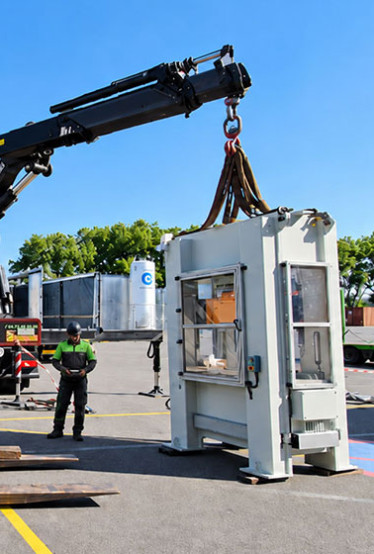
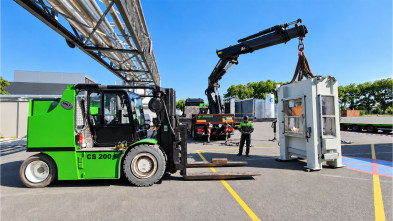
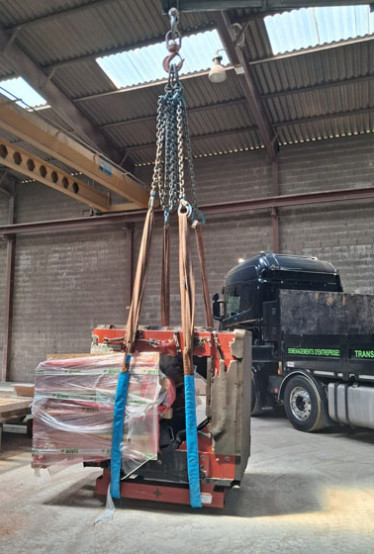
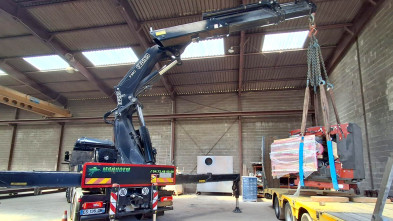
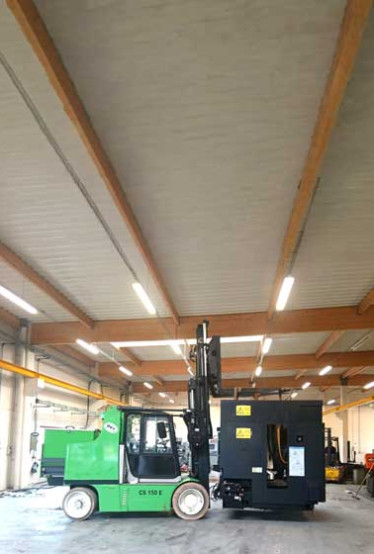
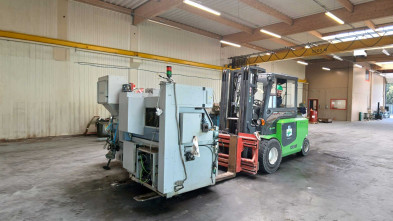
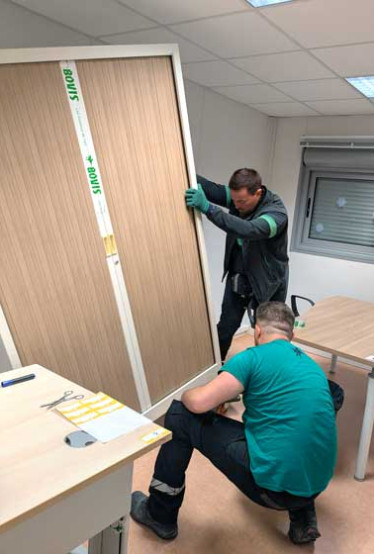
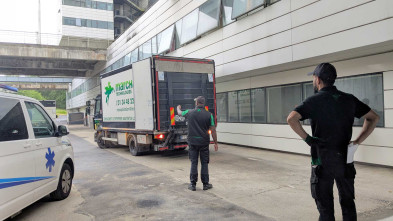
The teams at Bovis Midi-Pyrénées then transform the virtual model into a tangible reality, with on-site operations thoroughly prepared using the data collected throughout the process.
This digital continuity enables:
- Reduced production downtime;
- Improved coordination among stakeholders;
- Safer transfer and installation operations;
- Faster commissioning;
- Guaranteed compliance with project requirements.
The transition from the virtual environment to reality is therefore achieved under optimal conditions of quality, safety and performance.
The Benefits of Digital Twin Technology for Industry
The combination of Lean Manufacturing, 3D scanning and 3D modelling has become a genuine competitiveness driver for manufacturers.
Improved Productivity
Better-designed workstations reduce unnecessary movements and optimise cycle times.
Enhanced Project Security
Digital validation helps minimise technical risks before work even begins.
Reduced Costs
Fewer errors, less rework and reduced production downtime.
Improved Ergonomics
Operators benefit from safer and more comfortable working conditions.
Optimised Industrial Flows
The movement of people, materials and equipment becomes more efficient.
Bovis Midi-Pyrénées: Your Partner for Industrial Projects
Thanks to its expertise in complex industrial environments, Bovis Midi-Pyrénées supports companies in their optimisation and transformation projects.
By combining reality capture, digital twin technology, virtual validation and on-site implementation, the teams of the BOVIS Group provide a complete solution for modernising workstations, securing investments and sustainably improving industrial performance.
Today, workstation optimisation through digital twin technology is an essential solution for manufacturers seeking greater efficiency and competitiveness. By combining Lean Manufacturing, 3D scanning and 3D modelling, Bovis Midi-Pyrénées helps companies move from real-world conditions to a reliable virtual model and then to a fully controlled operational implementation.
This innovative approach delivers a comprehensive project vision, reduces risks and supports faster, safer and more profitable decision-making for all industrial stakeholders.
Share on :